EN

Land och språk

  • Eget lager i Stockholm
  • Fakturaköp för verksamhet
  • Fri frakt över 1 000 kr
4,784 omdömen på Google order@hjartgruppen.se

Batteries

The battery is chosen by the defibrillator's exact model designation, not by the brand — the same manufacturer uses different batteries for different models.

Batteries for defibrillators from Philips, Stryker LIFEPAK, ZOLL, HeartSine, Defibtech, Nihon Kohden, Mediana, Schiller, Primedic, Cardiac Science and six more brands. If you cannot find your model, we will help you read off the designation.

Filtrera och sortera
Sortera

Batteries — alla produkter

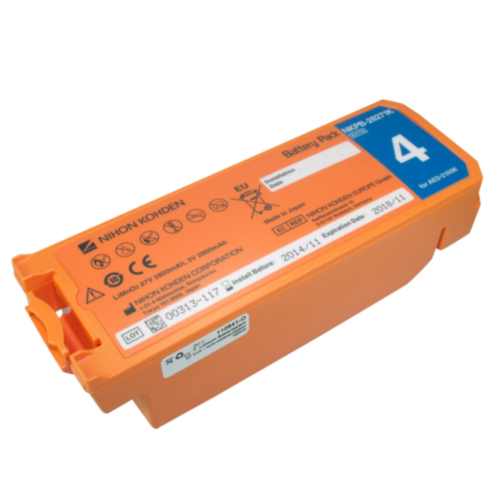
NIHON KOHDEN CARDIOLIFE AED batteri 2100 serienNihon Kohden
4,311 kr3,449 kr Translation missing: en.products.product.ex_vat
Translation missing: en.products.product.available

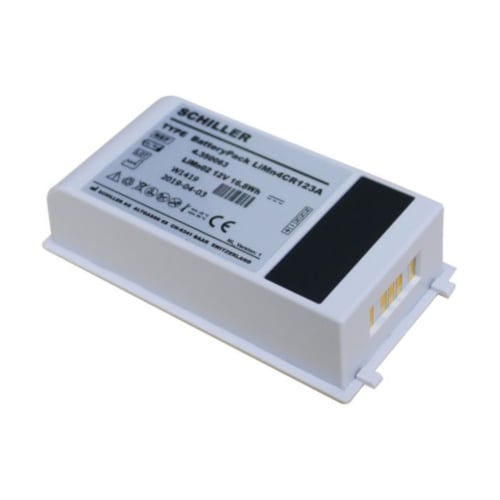
DefiSign Pocket Plus batteriSchiller
3,249 kr2,599 kr Translation missing: en.products.product.ex_vat
Translation missing: en.products.product.available

Batteri FRED EasyportSchiller
2,210 kr1,768 kr Translation missing: en.products.product.ex_vat
Translation missing: en.products.product.available

Batteri FRED EasySchiller
3,360 kr2,688 kr Translation missing: en.products.product.ex_vat
Translation missing: en.products.product.available

Batteri Mediana HeartOn A15Mediana
3,849 kr3,079 kr Translation missing: en.products.product.ex_vat
Translation missing: en.products.product.available

Populär
Batteri Powerheart G5Cardiac Science
7,969 kr6,375 kr Translation missing: en.products.product.ex_vat
Translation missing: en.products.product.available

Alla 30 produkter visas

Find the right battery for your model

The brand is not enough. Philips HeartStart HS1 and FRx share a battery (M5070A), but Defibtech Lifeline and Lifeline VIEW each have their own. Mediana HeartOn has three different ones for A10, A15 and A16, and Schiller four for DefiSign LIFE, FRED Easy, FRED Easyport and DefiSign Pocket Plus. Nihon Kohden distinguishes between the AED-2100 series and AED-3100. Order by brand instead of model and you get the wrong battery.

The model designation is on the defibrillator's label, usually on the underside or the back, and in the instructions for use. If an old battery is fitted, the article number is printed on it — that is the most reliable source. If you are unsure: get in touch with the model name and we will answer.

Battery and electrode pads — sometimes the same cartridge

On most defibrillators the battery and electrode pads are two separate parts with two expiry dates to keep track of. But not all of them:

  • HeartSine samaritan uses PAD-PAK, a cartridge where battery and electrode pads sit together and are replaced as one unit. That leaves a single expiry date to monitor. PAD-PAK is available with both adult and paediatric electrode pads and fits 350P, 360P and 500P.
  • Other brands require you to keep track of both parts separately. Shelf life differs: the LIFEPAK CR2's electrode pads last about four years, as long as the battery, while other electrode pads expire earlier. Read both dates — do not assume they follow each other.

If you are replacing both at the same time anyway, you will find the electrode pads under electrode pads.

Standby life, self-tests and when to replace

The most common batteries last about four years in standby. The Philips M5070A manages up to 200 shocks, and the LIFEPAK CR2's battery between 103 and 166 depending on the conditions of use — but in practice it is time, not the number of shocks, that decides when it should be replaced.

Modern defibrillators run daily self-tests and record the battery's installation date. If the device raises an alarm, the battery should be replaced immediately. Do not wait for the alarm: replace it at the expiry date even if everything looks normal, and note the date of the next replacement when you fit the new one. A battery left in past its date can pass the self-test and still fail in a real emergency.

If you have several defibrillators at a workplace, it is worth listing the model, the battery's article number and the expiry date in one place. Contact us or request a quote if you need batteries for several units.

See also defibrillators, defibrillator cases and our guide to defibrillators.

Vanliga frågor om batteries

How do I know which battery my defibrillator needs?

Read the model designation on the defibrillator's label, usually on the underside or the back. The brand alone is not enough — the Philips HeartStart HS1 and FRx share a battery, while the Defibtech Lifeline and Lifeline VIEW each have their own, and the Mediana HeartOn has three different ones for the A10, A15 and A16. If an old battery is fitted, the article number is printed on it.

How often should the battery in a defibrillator be replaced?

The most common batteries have around four years of standby time from installation. Replace it at the expiry date even if the defibrillator has not alarmed — the daily self-tests do not detect everything, and a battery past its date can fail when it is really needed. Note the next replacement date when you fit the new one.

Do I have to replace the electrode pads at the same time as the battery?

Not necessarily. On most models they are two separate parts with their own expiry dates, and the electrode pads normally have a shorter shelf life than the battery. The exception is the HeartSine samaritan, where the PAD-PAK contains both battery and electrode pads in one cartridge that is replaced as a single unit.

What happens if the battery expires but the defibrillator does not alarm?

The self-tests check that the battery responds, not that it still has full capacity for a real defibrillation. A device can therefore show green with a battery that has passed its date. The expiry date is the manufacturer's limit for guaranteed function — stick to it.