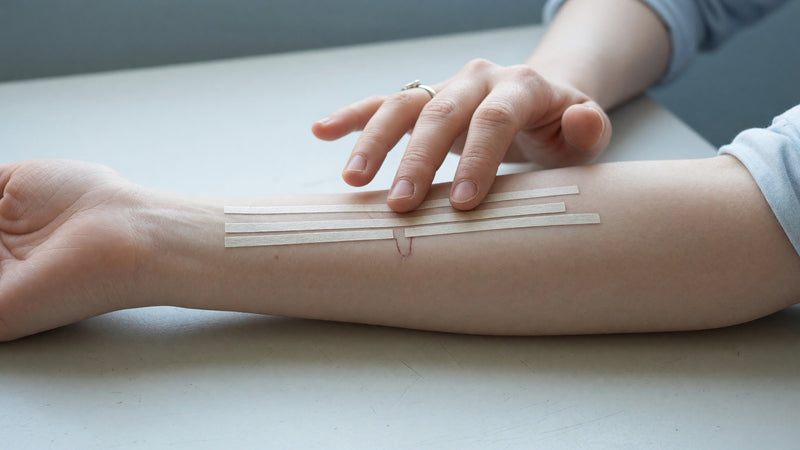
Suture strips
Wound closure strips hold the skin edges of superficial, tension-free cuts together without stitches. If the wound gapes or the skin is under tension, suturing is required instead.
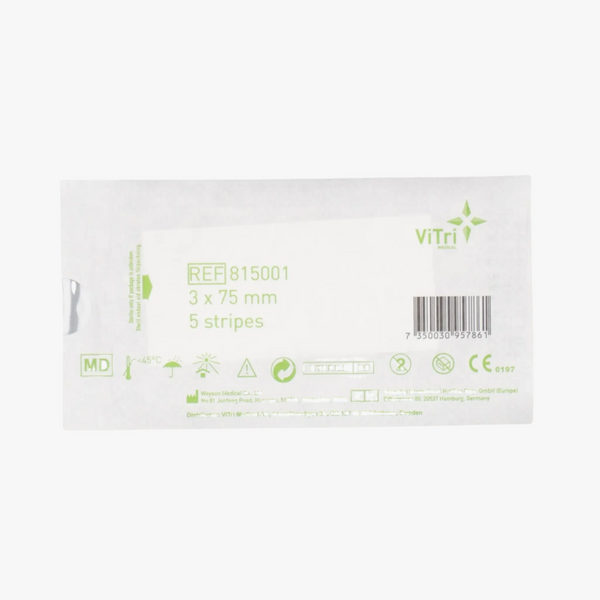
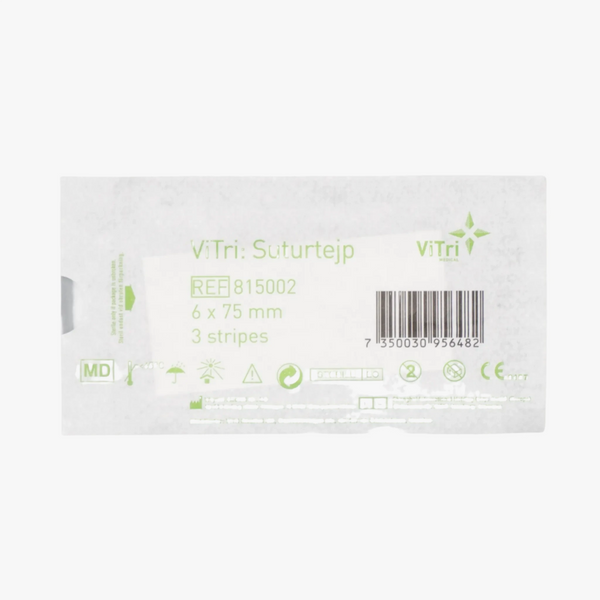
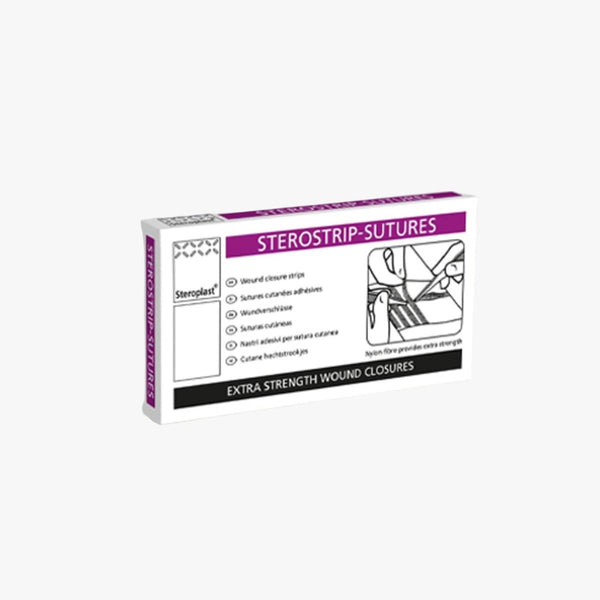
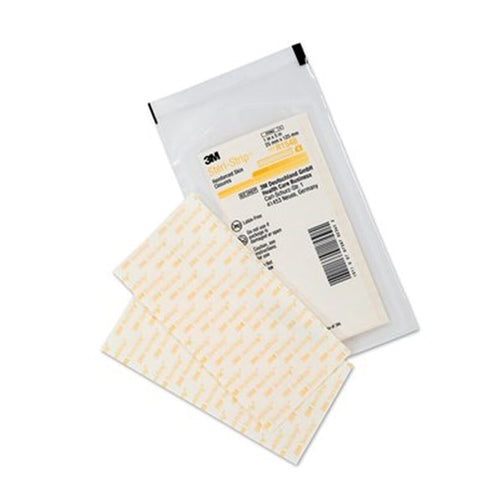
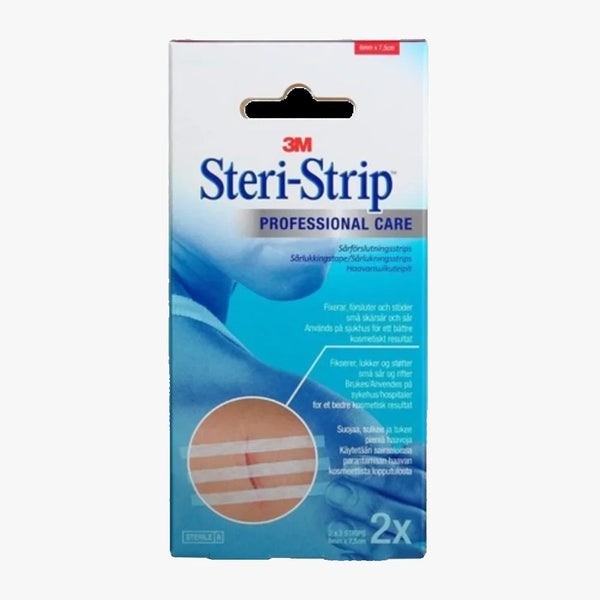
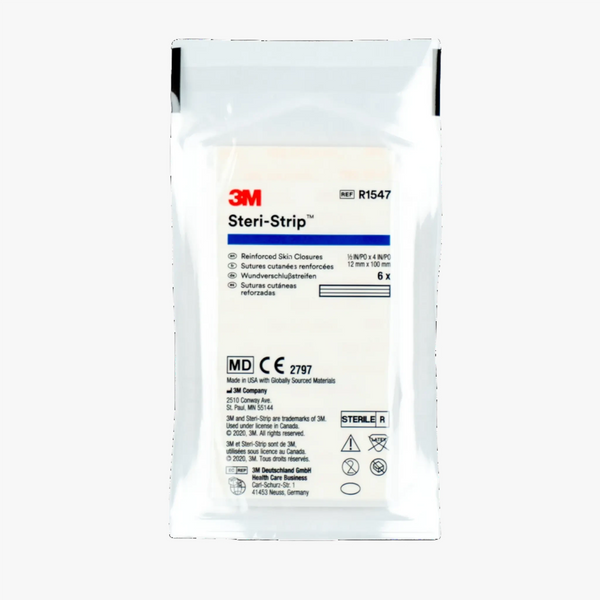
Wound closure strips — also known as steri-strips — hold the skin edges of smaller cuts together without stitches. We stock 3M Steri-Strip, Vitri and Steroplast in widths of 3–25 mm, as single envelopes or bulk packs for clinics. Chosen by anaesthetists who dress wounds in their own clinical work.
Suture strips — all products
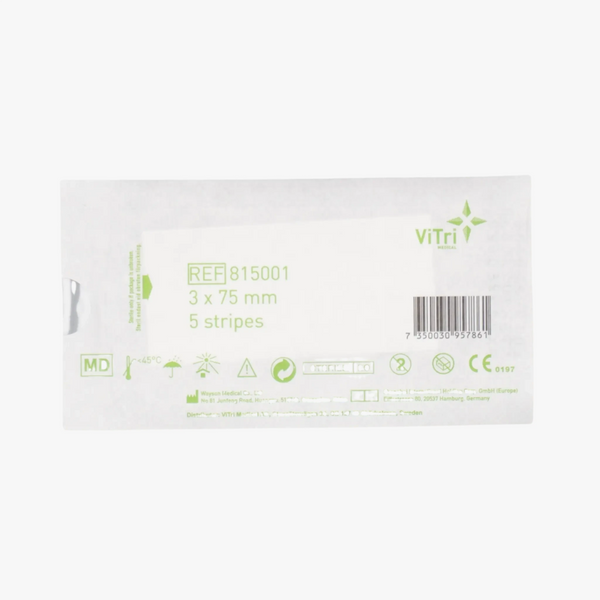
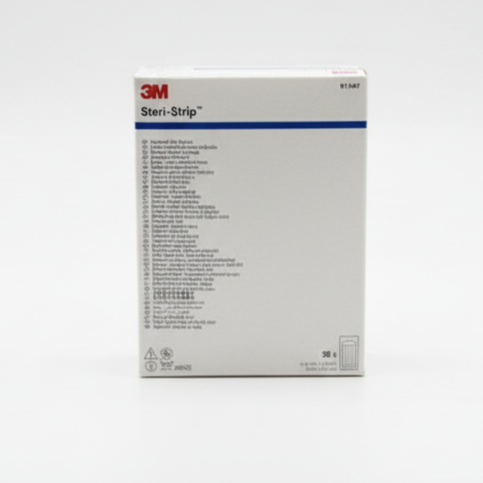
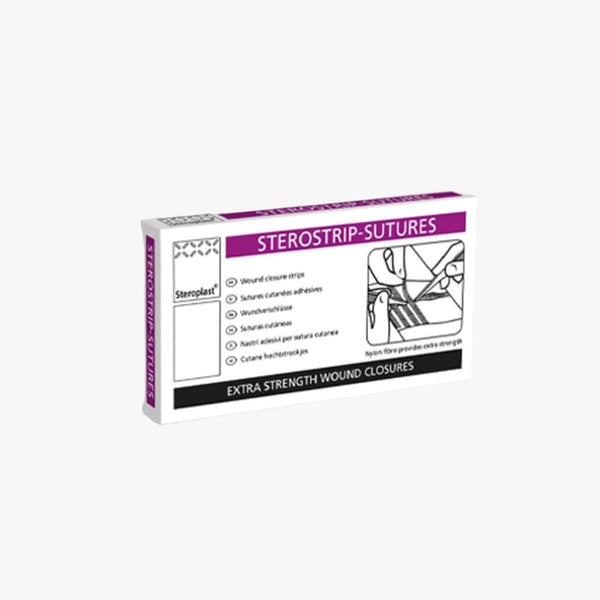
Frequently asked questions about suture strips
What is the difference between wound closure strips and steri-strips?
None — Steri-Strip is 3M's brand name for wound closure strips, and the name is used in everyday speech as a general term for the whole product type. Equivalent strips are also available from Vitri and Steroplast. The differences between them lie in width, length, reinforcement and packaging, not in function.
When are wound closure strips enough instead of stitches?
On superficial, straight cuts where the edges can be brought together without tension and where the wound is not bleeding actively. If the wound gapes, fatty tissue is visible in its base, or the injury sits over a joint that moves a great deal, it should be assessed by a healthcare professional — suturing is usually required. If in doubt, seek care the same day.
How long should the strips stay on?
Leave the strips on until they come away by themselves, as a rule five to ten days depending on where on the body the wound is. Do not pull them off early — the newly formed tissue is not yet holding the edges together on its own. Keep the strips dry for the first few days; wet tape lifts.
Guides for Suture strips
Jämförelser av utrustningen i den här kategorin, skrivna av våra anestesiologer.