EN

Country and language

  • Eget lager i Stockholm
  • Fakturaköp för verksamhet
  • Fri frakt över 1 000 kr
4,784 omdömen på Google order@hjartgruppen.se

Defibrillators

A defibrillator (AED) analyses the heart rhythm and only delivers a shock when the rhythm is shockable. It can be used by anyone without training, and in our range costs SEK 11,000–30,000.

A defibrillator can be the difference between life and death in sudden cardiac arrest. At Hjärtgruppen we select and advise on defibrillators with the same expertise we use in our own CPR courses — as anaesthetists, not as salespeople.

Filter and sort
Sort

Defibrillators — all products

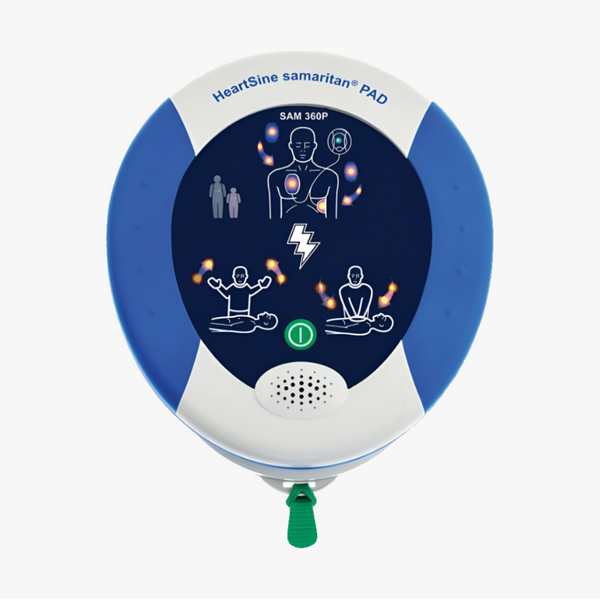
Defibrillator Samaritan PAD 360P automatic with bagHeartsine
17,520 kr14,016 kr excl. VAT
Available

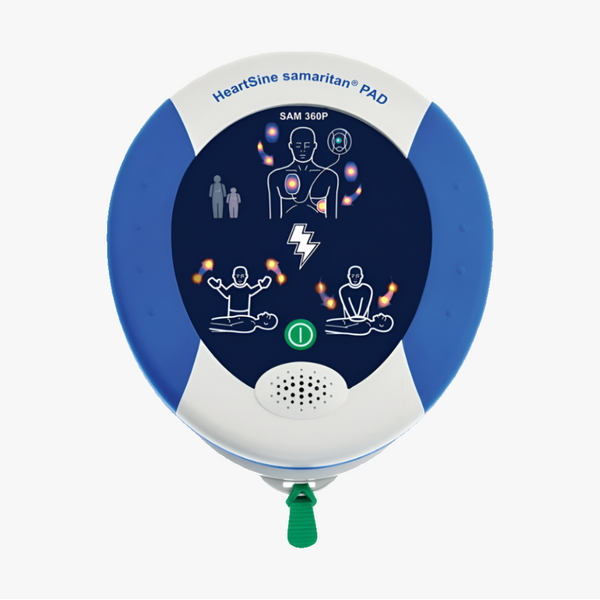
Defibrillator Samaritan PAD 350P semi-automatic with bagHeartsine
17,010 kr13,608 kr excl. VAT
Available

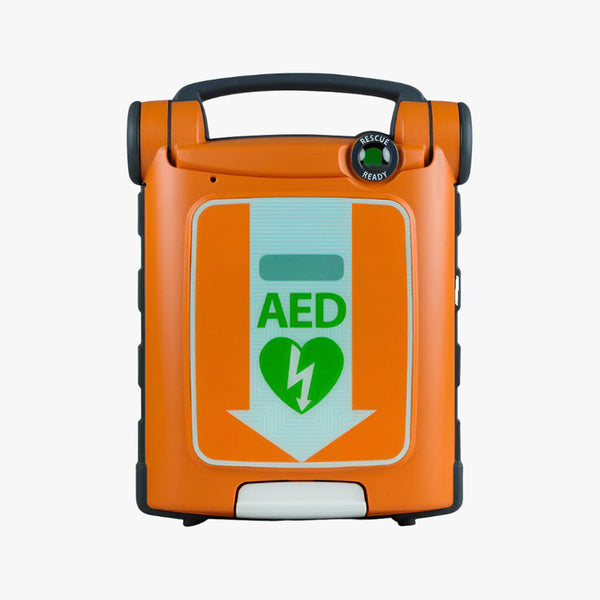
Defibrillator Powerheart G5 automaticCardiac Science
20,625 kr16,500 kr excl. VAT
Available

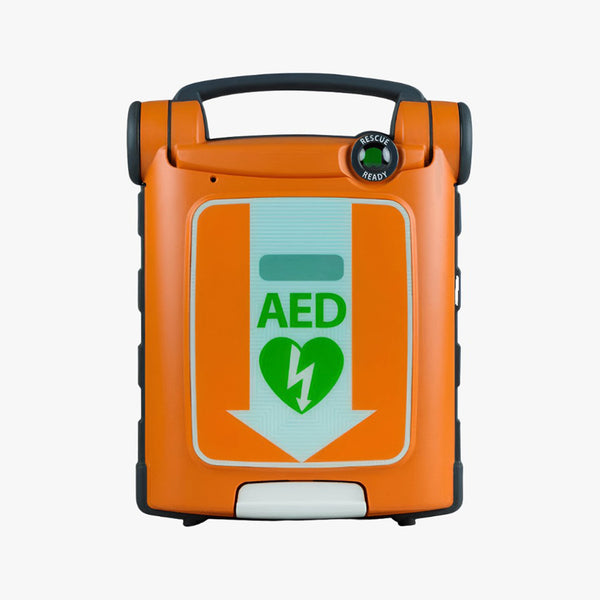
Defibrillator Powerheart G5 semi-automaticCardiac Science
20,625 kr16,500 kr excl. VAT
Available

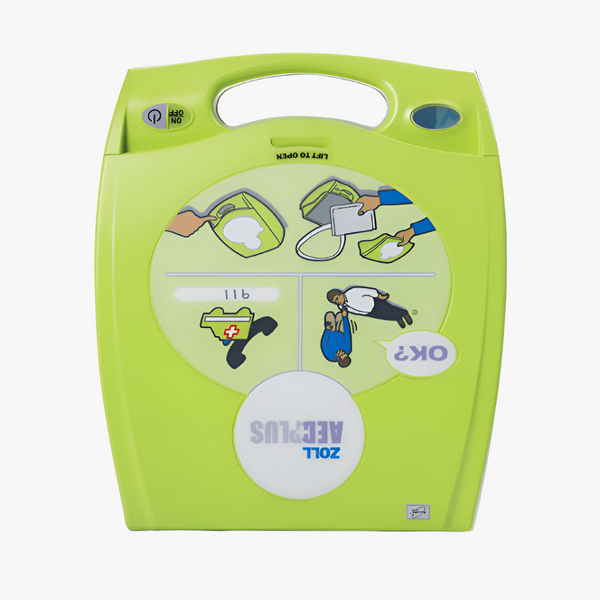
Defibrillator Zoll AED PlusZOLL
17,749 kr14,199 kr excl. VAT
Available

All 29 products are shown

The defibrillator that saves lives before the ambulance arrives

Around 10,000 people in Sweden suffer sudden cardiac arrest outside hospital every year. Survival averages below ten per cent — but in witnessed cardiac arrest with a shockable rhythm, where CPR is started immediately and a defibrillator is within reach, a considerably larger proportion survive. Every minute without defibrillation lowers the odds.

Hjärtgruppen is run by anaesthetists and CPR instructors with clinical experience of cardiac arrest. We have hand-picked the defibrillators we trust ourselves, and you get advice from people who actually work with this — not a sales department.

Brands we stand behind

  • Lifepak (Stryker/Physio-Control) — CR2 and CR Plus. Used by emergency services around the world, robust and with clear voice prompts in Swedish.
  • HeartSine (Stryker) — the Samaritan PAD range. Compact, with the PAD-PAK that combines electrode pads and battery in a single unit — simpler maintenance, lower running costs.
  • Cardiac Science — Powerheart G5, fully automatic with a daily self-test (Rescue Ready). Suits settings without a dedicated equipment manager.
  • Zoll — AED 3 and AED Plus, with Real CPR Help giving real-time feedback on chest compressions.
  • Defibtech — the Lifeline range, easy to use and good value. A common choice for clubs and smaller workplaces.

Who needs a defibrillator?

Cardiac arrest happens anywhere — in the office, at reception, in the car park. What decides the outcome is the distance measured in time: the person standing closest with a defibrillator does more good than the best-equipped ambulance ten minutes away.

  • Companies and offices building up their first aid preparedness.
  • Sports clubs — cardiac arrest during physical activity also strikes the young and healthy.
  • Schools and nurseries.
  • Housing associations — one defibrillator covers everyone in the building.
  • Events and festivals — temporary cover for large crowds.
  • Local authorities — libraries, swimming pools and other public buildings.

How to choose the right defibrillator

Every defibrillator in the range is a CE-marked medical device from an established manufacturer.

Fully automatic or semi-automatic? A fully automatic AED delivers the shock itself — good where untrained staff may have to act. A semi-automatic one requires the user to press the shock button, which gives more control.

Indoors or outdoors? Siting a unit outdoors requires a temperature-controlled defibrillator cabinet, and often an alarm function.

Maintenance and running costs. Electrode pads and batteries have a limited service life and are replaced every 2–5 years — that is the recurring cost over the lifetime of the defibrillator, not the unit itself. HeartSine's combined PAD-PAK makes replacement simpler. We stock electrode pads and batteries for every model in the range.

CPR training. A defibrillator does most good alongside basic CPR skills among your staff. We sell CPR training equipment — manikins, training electrode pads and training defibrillators — and run courses ourselves.

Not sure which model suits you? Contact us — we will help you choose the right defibrillator, cabinet and accessories for your circumstances.

Vanliga frågor om defibrillators

Who is allowed to use a defibrillator?

Anyone — no training is required. The defibrillator analyses the heart rhythm automatically and only delivers a shock if one is needed, guiding you step by step with voice prompts. The only wrong thing to do is not to use it.

What does a defibrillator cost?

In our range the units cost roughly SEK 11,000–30,000 depending on model and equipment. On top of that comes the recurring cost of electrode pads and battery, which are replaced every 2–5 years. We will help you find a model that matches your budget and your needs.

How often does a defibrillator need servicing?

Most modern defibrillators run daily self-tests and show with an indicator that they are ready. Electrode pads and batteries have a limited service life and must be replaced before they expire — typically every 2–5 years.

Do you need CPR training to use a defibrillator?

No, not formally. But a defibrillator does most good together with CPR. We recommend that staff take a CPR course — it raises both competence and the confidence to act in an emergency.

Can a defibrillator be used on children?

Yes. The energy level is lowered either with dedicated paediatric electrode pads, such as HeartSine's Pediatric-Pak, or with a child mode on the unit itself — the solution differs between models. If no paediatric option is available: use adult pads. Defibrillation with adult pads is better than no defibrillation at all.