Elastic bandage is not one product type. The range includes cohesive bandages that grip themselves, elastic adhesive bandages that stick to skin, non-adhesive crepe bandages and long-stretch compression bandages. A triangular bandage is instead a sheet used mainly as a sling or support. Selection therefore starts with the task rather than with the products' similar appearance.

Quick comparison
| Product type | How it fastens | Main purpose | Important distinction |
|---|---|---|---|
| Cohesive bandage | Adheres to itself | Fixation and light support, depending on model | Normally does not adhere to skin or hair |
| Elastic adhesive bandage, EAB | Adhesive to skin and itself | Firm fixation and support | Not the same as a cohesive bandage |
| Crepe bandage | Clip, tape or separate fastener | Support or dressing retention | No self-adherent surface |
| Compression bandage | Clip or separate fastener | Controlled compression | Pressure depends on material and application |
| Fixation bandage | Usually secured separately | Holds a dressing in place | Is not automatically a support bandage |
| Triangular bandage | Tied or pinned | Sling and arm support | Not an elastic compression bandage |
This table describes product groups. Always read the individual instructions because extensibility, materials, adhesive, reusability and intended use vary.
What is an elastic bandage?
An elastic bandage stretches and follows body contours. Applied pressure changes with stretch and overlap, so width alone is not enough to define its function. Two products with the same dimensions may have different extensibility and intended uses.
Examples include ViTri SelfFix, a cohesive medium-stretch bandage; ViTri Compression Bandage, a highly elastic long-stretch product; and Steroplast crepe bandages without a self-adherent surface. Compare the full elastic bandage range.

Cohesive, self-adherent and elastic adhesive bandages
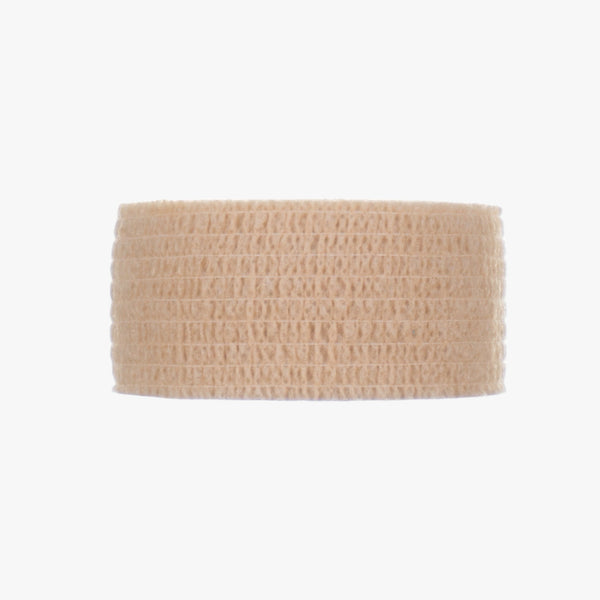
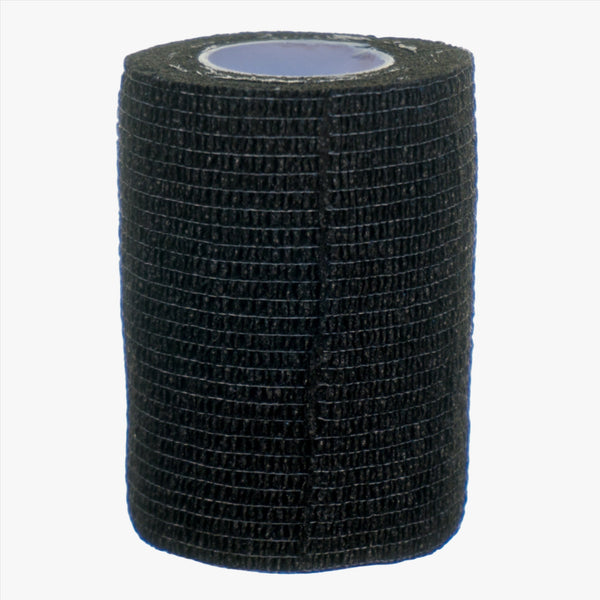
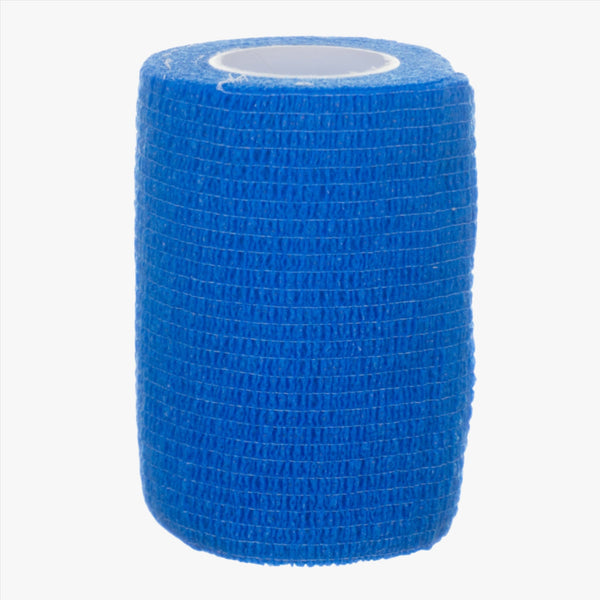
The terms are often mixed, but the difference matters. A cohesive bandage grips itself, normally needs no clips and does not adhere to skin or hair. Snøgg ElastoQuick and ViTri SelfFix belong to this group. It is convenient for quick fixation, but must not be applied so tightly that circulation is affected.
An elastic adhesive bandage, or EAB, contains adhesive and sticks to both skin and itself. Steroplast EAB is one example. It cannot accurately be described as a cohesive product that only grips itself. Check skin tolerance and follow the product instructions for application and removal.
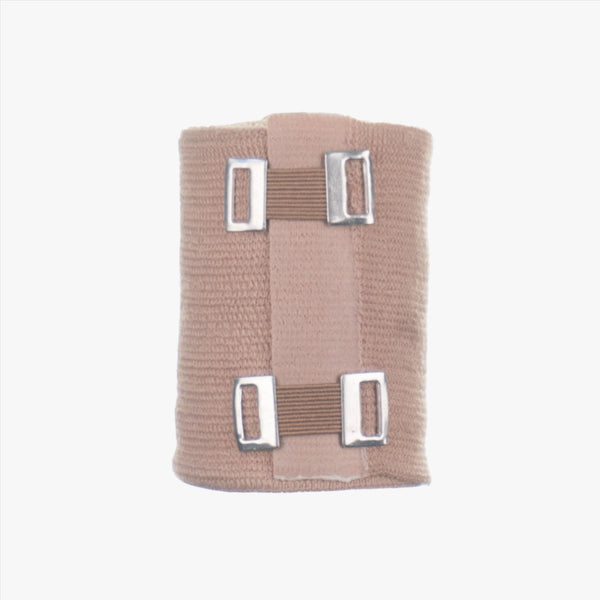
A crepe bandage has neither of these fastening properties. It provides elastic support or dressing retention and needs a separate fastener. Steroplast Sterocrepe is described by its manufacturer as washable and reusable, while other products may be single use. Follow product and hygiene instructions rather than judging reusability by appearance.
What makes a compression bandage different?
Compression is not a fixed value that is identical at every application. Actual pressure depends on extensibility, tension, number of layers, overlap and limb circumference. Clinical guidelines distinguish short-, medium- and long-stretch bandages and stress the need for the correct technique and assessment.
ViTri Compression Bandage is a long-stretch model with approximately 150% extensibility. ViTri Forte has a stronger construction and approximately 175% extensibility. This does not mean the strongest model is always appropriate. Medical compression therapy for venous disease must be selected by or with a healthcare professional, particularly where arterial circulation is impaired or the person has diabetes or heart failure.
If a bandage causes increasing pain, numbness, tingling, coldness or a colour change, loosen or remove it and arrange assessment. A guide cannot determine a safe pressure for an individual.
When is a triangular bandage used?
A triangular bandage, often used as a sling, is a non-elastic triangular sheet. Its classic purpose is supporting an injured arm. It can also provide broad support or secure material, but it is not a mouldable splint and is not a compression bandage.
For a suspected fracture, address threats to life first. Support the injured body part in the least painful position, avoid unnecessary movement and do not attempt to straighten a deformity. Call the emergency services after a serious injury or when the person cannot be moved safely. Read our immobilisation and splint guide.
Choosing a bandage for the situation
Securing a dressing
Use a flexible fixation bandage or a cohesive bandage whose instructions specify dressing retention. It should hold the dressing without unnecessary pressure. For severe bleeding, the task is instead to control bleeding with direct pressure and a suitable pressure dressing, while contacting emergency services when required.
A suspected sprain
It can be difficult to distinguish a sprain from ligament damage or a fracture. Rest and stabilise the area. A trained person may apply temporary compression according to recognised first-aid guidance. Arrange medical advice if the person cannot bear weight, the limb looks deformed, pain is severe or the injury is not improving.
Supporting an arm
A triangular bandage can be used as a sling. Let the arm rest in a comfortable position and ensure the support does not increase pain or affect circulation. A suspected fracture or serious shoulder injury requires medical assessment.
Medical compression therapy
Do not select a product solely because its name contains “compression”. Treatment requires the correct product class, appropriate pressure and an assessment of circulation and underlying conditions. Follow the prescription, current instructions and clinical protocol.
Width and pack size
Narrow 2.5–5 cm bandages provide precision on small areas. 7.5–10 cm are common general-purpose widths for fixation and support, while 12–15 cm cover larger areas. This is a purchasing principle, not a medical dosage: body area, intended use and technique determine suitability.
Single rolls suit replenishing a first-aid kit. Multipacks reduce handling for regular users, but check storage and expiry information where applicable. Do not mix unlabelled products simply because they look similar; fastening properties may differ completely.
Common mistakes
- Treating all self-adherent products as identical. Cohesive bandages and EAB fasten differently.
- Judging compression only by feel. Material, overlap and circumference affect pressure.
- Describing a crepe bandage as self-adherent. It needs a separate fastener.
- Using a triangular bandage as a medical compression bandage. The products have different purposes.
- Ignoring circulation symptoms. Pain, numbness, tingling, coldness or colour change means the bandage should be loosened and the situation assessed.
Sources and further reading
- Swedish Red Cross: first aid for a sprain
- Swedish national clinical programme for hard-to-heal wounds
- ViTri: Compression Bandage
- ViTri: Forte Compression Bandage
- ViTri: Solifix cohesive fixation bandage
- Snøgg: ElastoQuick
- Steroplast: Elastic Adhesive Bandage